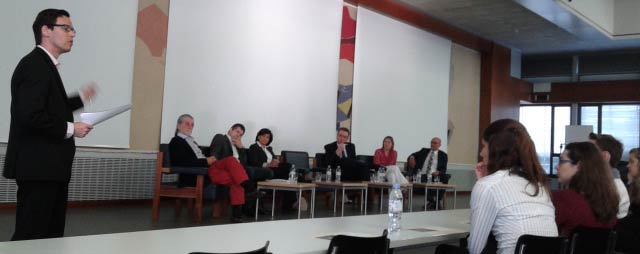
Peace Nobel Laureate Prof. Yunus at the Social Business Conference 2013

The second Social Business conference was held yesterday, with the keynote speech of Prof. Yunus, founder of the Grameen Bank and author of “Social Business”.

His talk was insighful, very pragmatic and full of hope, as ususal. It was also different from last year speech, with new inspiring stories from US and Albania, among others.

As USI President Martinoli said in the opening speech, Prof. Yunus is a great example of how academia can bring a remarkable positive change in the society!

yunus social business conference 2013

Kolours and Prof Yunus

Mother’s day infographic: the best and worst places to be a mother

Some negatively surprising insights… still a lot to do to help mothers and new born babies

Surviving the First Day STATE OF THE WORLD’S MOTHERS In honor of Mother’s Day, Save the Children presents their annual State of the World’s Mothers report in an infographic format

Ambiguous Visual road sign

No deers allowed in the museums

I’m quite puzzled by this sign. What does it mean?

Please post your answer!


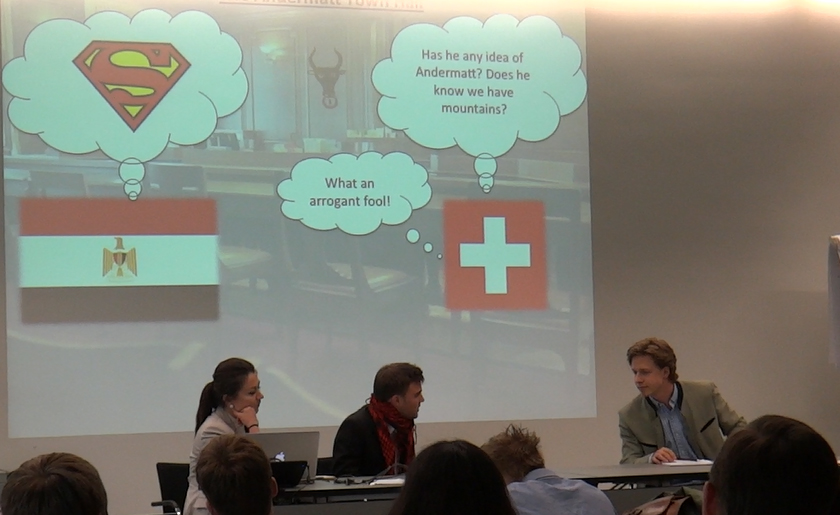
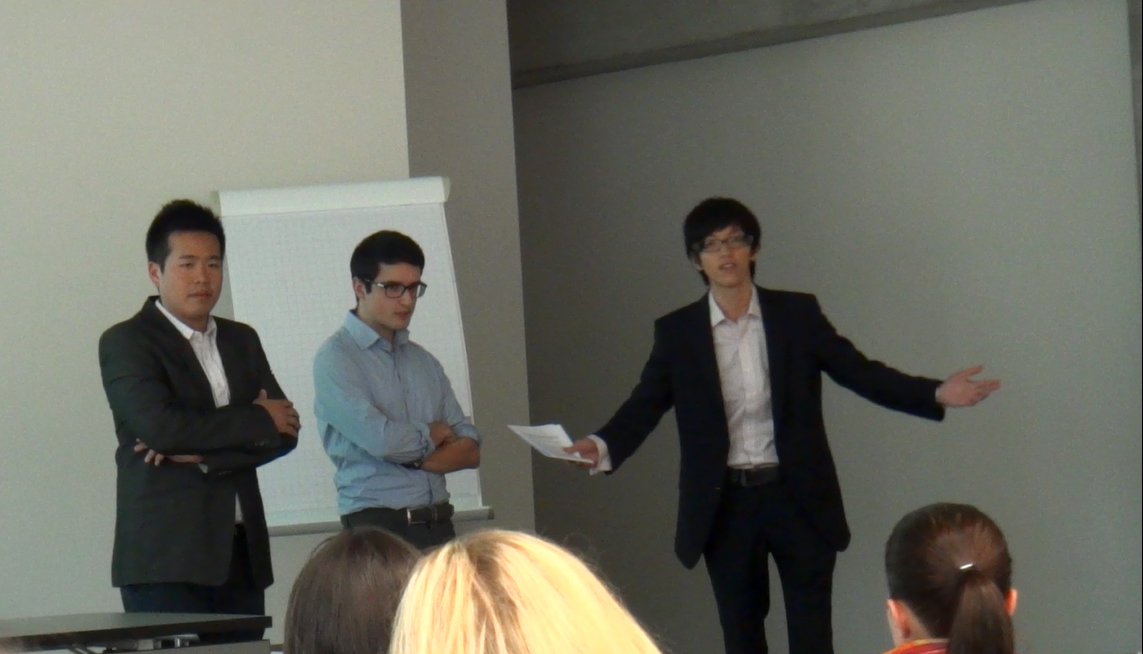
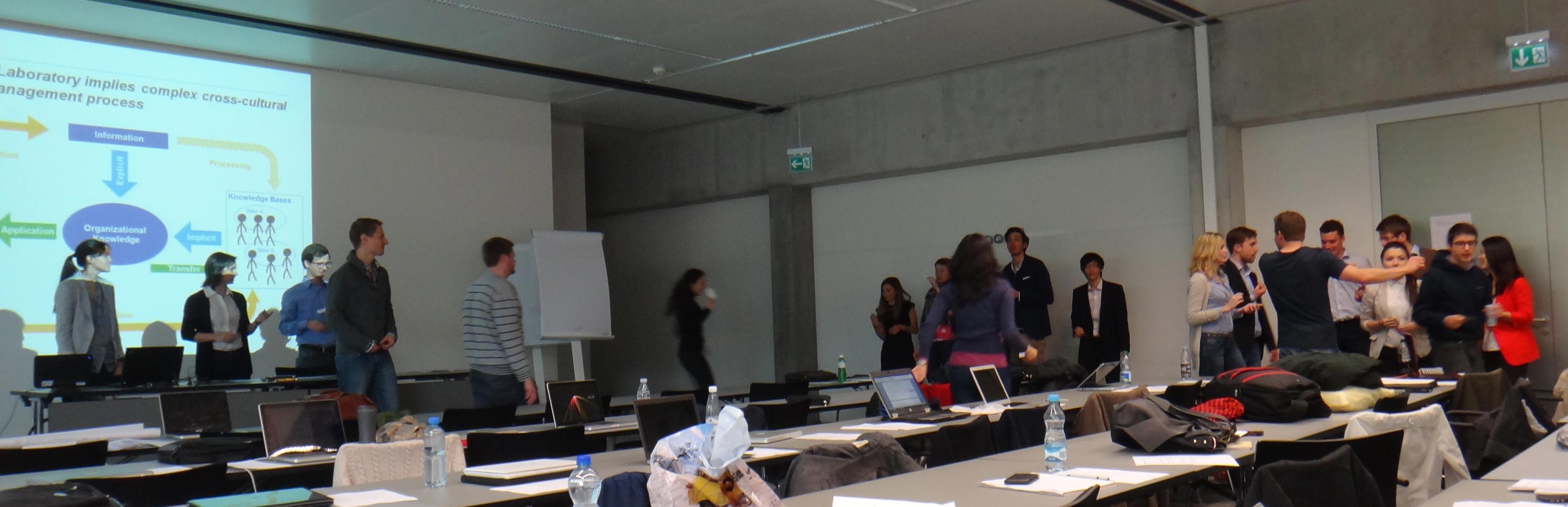
CEMS Intercultural Management Communication Presentations

Great presentations were delivered by the St.Gallen CEMS Master students, for the Intercultural Management Communication course.

The presentations were both entertaining and insightful: very talented students and great actors!

Untitled-4 Untitled-1 cems3


More pictures are available on the course webpage

Visualization & Intercultural Communication @ MIC

This is the presentation for the MIC, Master of Advanced Studies in Intercultural Communication of the Università della Svizzera italiana.

The topic of the course is Linguistics and Semiotics, and my module is on Visualization & Intercultural Communication:

MIC-pres

Fair trade at the Latin American Day, University of St. Gallen

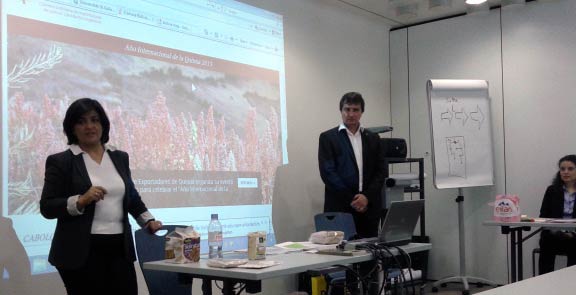
Today the Latin American Day 2013 took place at the University of St. Gallen, organized by Aiesec, and focused on the topic of Fair Trade.

The founder of the company Eco Terra, Dr. Carmina Alvarado De Van Bergerem, and her husband gave a very lively presentation on quinoa, the special grain. The started the company in 2006, importing Quinoa from Bolivia to Europe and also to the US. Quinoa is a unique cereal because it is gluten free and is very nutritious. The high quality quinoa grows above 4500 meters of altitude, a very challenging environment for humans, animals and plants. This is part of the reason why quinoa is both more nutritious, but also more expensive than other cereals. The UN has called 2013 the year of the Quinoa, emphasising the importance of this grain type to fight malnutrition in the world. You can use quinoa as cereal in the morning, to make soup or even to make quinoa-risotto, burgers or cereal bars. A great example of social business & looking forward to the webshop!

eco-terra-latin-american-day-st-gallen-fair-trade

The day concluded with a panel moderated by Prof. Eppler: among the panelist there was Francesco Illy, of Illy caffe and founder of Amici Caffè, Tobias Meier of Helvetas/Max Havelaar, Dr. Christiane Berth of the university, Heiko Specking of Credit Suisse and Nicolas Niklewicz of Impact Economy.

panel-latin-american-day-fair-trade-st-gallen

Managing Multicultural Teams – Presentation

An excellent example of the use of Prezi for an interactive presentation was prepared by my students on the topic of Managing Multicultural Teams:

Based on: Adler, N.J. (2008). International Dimensions of Organizational Behavior. South-Western Cengage Learning: Mason OH, Fifth edition, pages: 131-147 (chapter 5).

managing-multicultural-teams


Cultural differences in information seeking behaviors: evidence from an eye tracking study

Do people from different cultural backgrounds look at online information in the same way?

A very recent study – conducted with eye tracking technique – shows that Spaniard and Arab users have very different visual behaviors when attending information. In particular the experiment compared users scanning search results in Google. The results indicate that participants from the UAE (United Arab Emirates) spent more time on the search engine results page, read more results throughout the page and view each result in more details. In contrast the Spaniards read fewer options and typically attend more only the results on the top of the page.

Tha paper will be presented at the CHI 2013 workshop: Marcos, Mari-Carmen; García-Gavilanes, Ruth; Bataineh, Emad; Pasarin, Lara. Using Eye Tracking to Identify Cultural Differences in Information Seeking Behavior. Workshop Many People, Many Eyes. CHI’13, April 27-May 2, 2013, Paris, France.

These results support the conceptualization of a previous article “In Prise of Cultural Bias” published on MIT Sloan Management review, positing that Knowledge Management and Information Systems need to be adapted to local cultures.

See the video (in Catalan):

Business Communication in the Arab World

Dr. Annick Tonti just gave a very interesting guest lecture at the University of St. Gallen on “Working in the Arab World”

Based on her 40 years of experience in Asia and in particular in the Arab World, she shared with the students her insights on communicating with Arabs in business settings.

First she gave an introduction on the historical developments of the Arab World, a culture with 5 thousand years of history.

She stressed the importance to build a relationship with the business partner first: agreements and negotiations cannot be made straight away as in Western countries. “In the Middle East, they don’t do business if they don’t have a good relationship with you,” “They do not disassociate business and personal relationships.” For more details see: http://knowledge.wharton.upenn.edu/arabic/article.cfm?articleid=2730

Islamic banking is particular because it is usually based on Islamic law, the Sharia.These laws include the prohibition of taking interest, prohibition of unproductive speculation and prohibition of debt arrangements. What does it mean? Profit and loss are shared between the lender and the borrower.

Finally, Islamic law prohibits the financing of “sinful activities” (haram) such as the production of alcohol and tobacco or gambling.

Organizational communication across cultures with visual mapping: benefits and perils

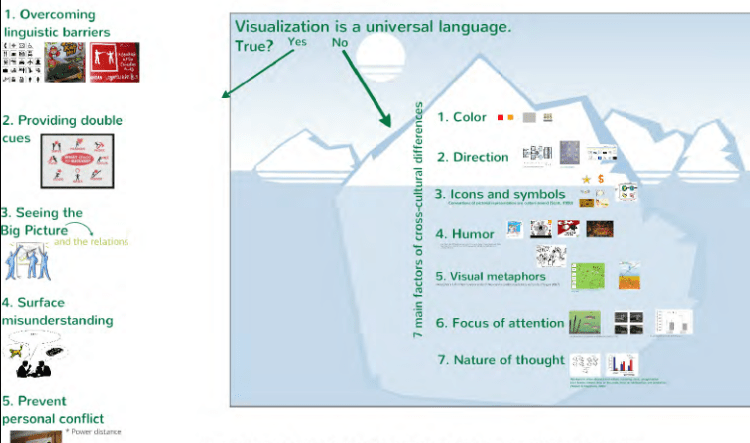
Communicating across cultures is often a challenge: it is easy to imagine that visualization can help us overcome linguistic barriers, but it can actually do much more!

The benefits of visual mapping for cross-cultural communication can be summarized in five main factors:
1. Overcoming linguistic barriers.
2. Providing double cues: When the verbal or textual information is not clear, the visual element can support elaborations and understanding.
3. Seeing the big picture and the relations: Mapping ideas forces to provide links between the contributions. In presence of cultural
differences, this explicitation is useful to convey ideas more clearly.
4. Surface misunderstanding: Visualization, thanks to its concreteness, can help to surface assumptions and misunderstandings by triggering an open discussion.
5. Prevent personal conflict: when ideas are mapped onto a visualization, participants can express their disagreement by referencing the idea visualized, rather than the person who proposed it. This advantage of visual mapping can be particularly useful in intercultural meetings in which the Power Distance  of the participants’ culture is largely different.

However visualization is not free of dangers when used in cross-cultural context: misunderstanding can arise, cause by seven main factors:

1. Color.
2. Direction: In Arabic and in traditional Chinese language information is read from right to left.
3. Icons and symbols: a handshake symbolizes agreement only in the west. Fork and knife are perceived as an exotic symbol in Asia.
4. Humor: humour is culturally dependent.
5. Visual metaphors: sport metaphors are not understood in coutries where that sport is not practiced.
6. Focus of attention: Westerners focus on the main central objects at the expenses of the background, and Asians focus equally on the background as on the foreground (Nisbett, 2003).
7. Nature of thought: Westerners prefer linear and analytical diagrams while Asians prefer more holistic types of visualizations such as visual metaphors.

If you are interested in more details you can check out my recent publication:  Bresciani, S. (2013). Organizational communication with visual mapping: Comparing East and West. In D. Ingenhoff (Ed.), Internationale PR-Forschung. Konstanz: UVK Verlag.
visualization-universal-language